

A New Chapter for Rock City

For more than 90 years, Rock City has welcomed guests to Lookout Mountain. Today, we are planning for the future, investing in a long-term solution that improves access, creates safer roads, and protects the mountain experience for generations to come.


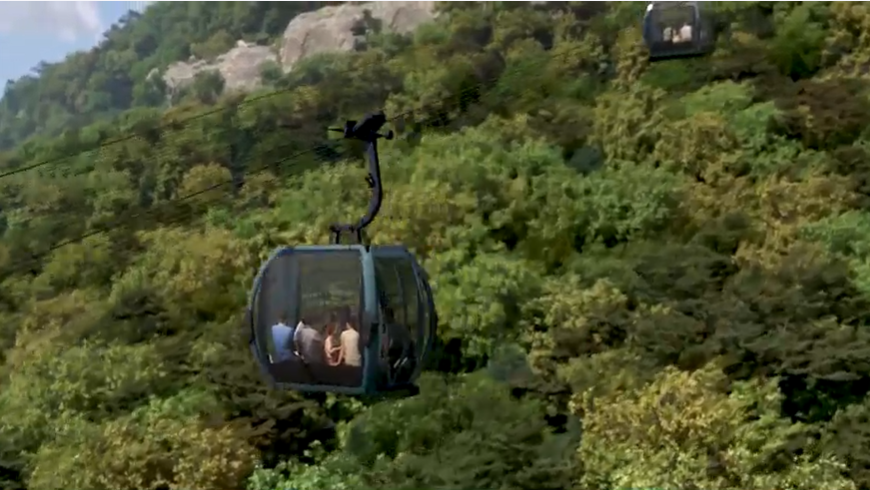



Project Benefits
→ Reduces traffic and wear and tear on mountain roads.
- The gondola will shift the main entrance to Rock City to the foot of Lookout Mountain, shifting most incoming traffic to that location.
- Removes all motor coach inbound traffic from curvy mountain roads.
- Reduces wear and tear on the curvy road maintained by 4 different municipalities.
→ Reduce the bottleneck on parking at Rock City.
- Currently all parking for Rock City is located on the mountain in very old lots.
- Creates added parking capacity, allowing guests to spend longer inside Rock City.
- Traffic impact is primarily driven by parking constraints.
→ Thoughtfully designed for Lookout Mountain.
- This project has been shaped by community input and careful planning to align with the character of Lookout Mountain. It is designed to:
- Use existing developed areas wherever possible.
- Minimize visual and environmental impact.
- Preserve the natural beauty that defines this place.
→ Create an incredible one-of-a-kind experience for everyone to enjoy.
- Just look at that video and the images below, it is going to be AMAZING!
Rock City has been part of this community since 1932. This investment continues that legacy – balancing preservation with thoughtful improvements that benefit both residents and visitors.
Rock City Gondola: Myth Busting
See Rock City, Inc. prepared responses to the Top 10 Myths raised in the media, online, and at six hosted community meetings.
Myth #1: This zoning amendment request is a cover for approval of a larger secret project.
Our request is narrow: to add an aerial passenger conveyance system as a permitted use in the Tourist Commercial District. We will be using our land which is the only land in Lookout Mountain, Georgia zoned Tourist Commercial. At each community meeting, our vision for the next 25 years was shared. There’s no larger project and we are grateful for those who joined us to ask questions and learn more about our efforts.
Myth #2: This won’t decrease traffic on Lookout Mountain, and the traffic study was biased in favor of Rock City’s preferred outcome.
A state-licensed traffic engineer who is legally and professionally bound to adhere to industry standards conducted the traffic study. Licensed engineers carry professional liability insurance for their work. They do not produce reports that reflect a client’s request.
The findings from Kimley-Horn’s 197-page report noted the gondola project is specifically designed to divert traffic from Ochs Highway by routing them to a welcome center located at the base of the mountain. For detailed information, we invite you to review the report.
Myth #3: The gondola itself will increase tourist traffic on the Mountain.
As is the case with any business, we are making plans for future growth, which will happen on our property. We are making plans to address traffic and parking issues well before any construction occurs. Our near-term plans include a new trail system which will include accessible walkways for guests of all abilities. This will increase attendance at Rock City and the gondola provides a solution to the issue of increased tourist traffic.
Myth #4: Rock City owes the City more information to review the requested amendment.
Rock City is not required to submit traffic studies, geologic, environmental, or sewer-impact studies before the City considers this amendment. Rock City took a different approach because of the relationship we’ve shared with our community for the last 94 years. Reports and information were released in advance for public review. There is a process for all actions coming before City Council and Rock City has done more than is typical of any project at this early stage.
Myth #5: The rezoning in Walker County requires review by the Northwest Georgia Regional Commission for a Development of Regional Impact (DRI).
While a DRI review may be required in the future, it isn’t required at this time.
Myth #6: The noise will disturb residents.
Rock City provided information from the Dopplemayr Group regarding detailed decibel readings of similar systems. Rock City has taken the additional step of asking electrical engineers to provide information from our specific sites. This work is in process and will be shared upon completion.
Myth #7: This creates safety concerns.
Doppelmayr has installed more than 15,000 systems across 97 countries and maintains one of the strongest safety records in the transportation industry. Our transportation system also provides additional value as an alternative route when mountain roads are obstructed or closed due to weather. The gondola provides a means of access not impacted by wrecks, snow, or other issues that impact travel.
Myth #8: The gondola will destroy the tree canopy.
The system Rock City has selected is engineered to travel above the tree canopy. There is no need to clearcut a path for cable lines. Small footprints will be cleared around the base of each support pole.
Myth #9: The gondola will have a negative environmental impact on the mountain.
Gondola systems have no exhaust, no fuel combustion and leave nothing on the surfaces below. Rock City has engaged a local environmental consulting firm to review our plans and advise on the potential effects on wildlife. We will adhere to the professional advice we receive to make sure we’re not only good stewards of our community but also of our environment.
Myth #10: The system will require FAA lighting.
FAA obstruction lighting is only required for structures exceeding 499 feet above ground level. Rock City’s gondola project does not meet this requirement as the gondola poles do not exceed 200 feet in height. Interior cabin lights will be located below the seats to illuminate the cabin floor. The lights have an automatic turn-off when the cabin door closes.

Frequently Asked Questions
About the Project

City Requests & Approvals
Traffic, Design & Mountain Impact
Economic & Community Impact
What’s Next
Feedback
If you have comments or additional questions, please reach out to [email protected].
Project Highlights

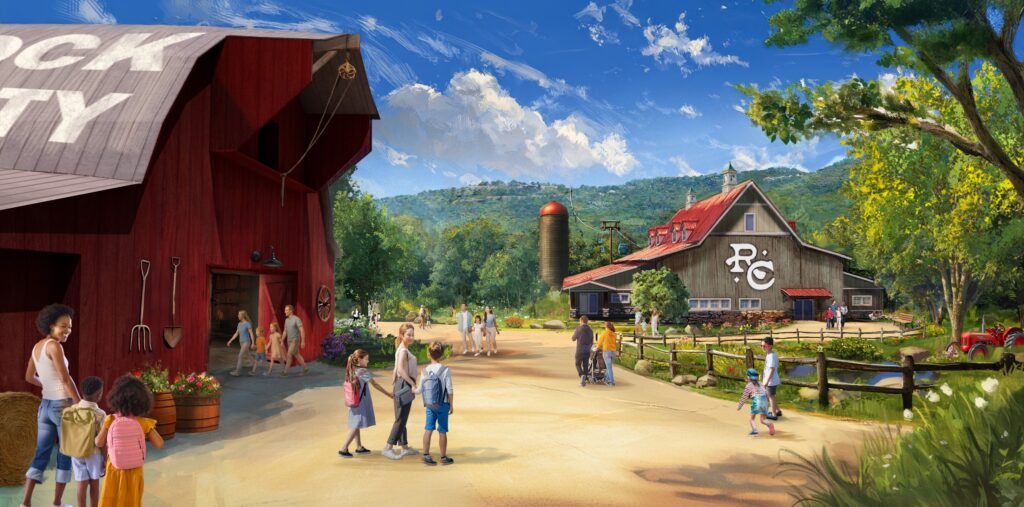
Blowing Springs Farm Entry Area
Guest arrival will shift to the base of the mountain, easing congestion and creating a welcoming gateway designed with rustic character and natural landscaping.


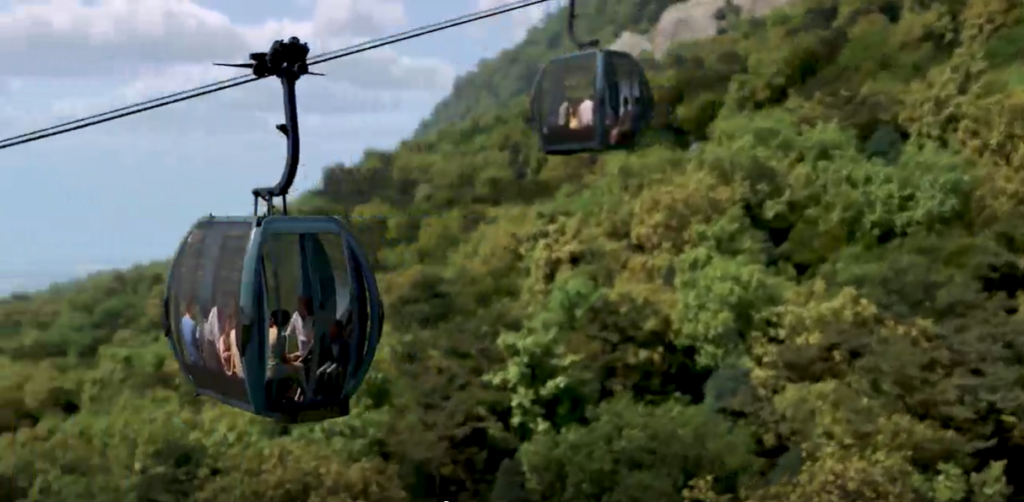
Gondola Connection
A gondola system, designed by Doppelmayr, will provide a quiet, efficient, and environmentally responsible connection to the mountaintop, reducing reliance on mountain roads.
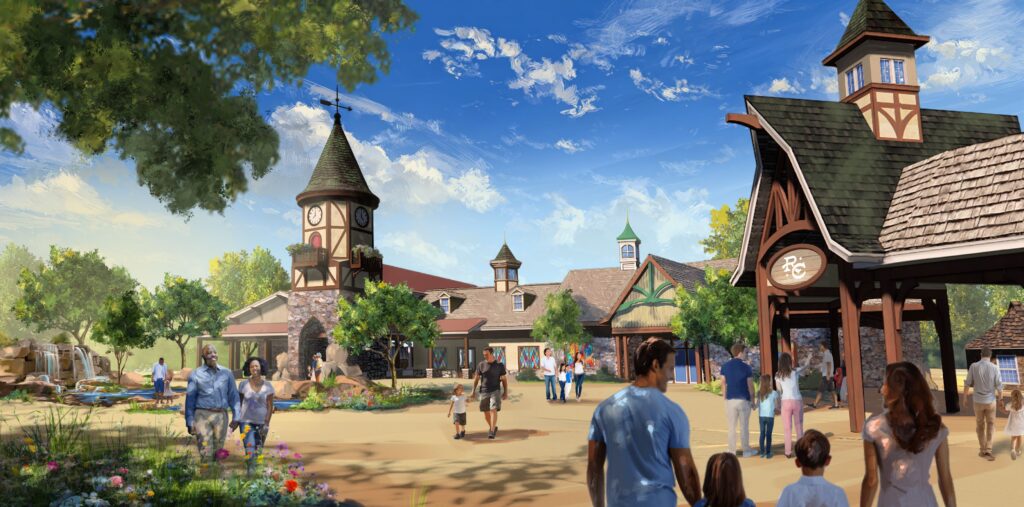
Mountaintop Entry
A new entry experience inspired by historic Fairyland architecture will blend timeless design with modern hospitality.
Guided by Stewardship
Rock City has cared for this mountain for generations. Now in its fourth generation of family ownership, that commitment continues – rooted in the vision first established by Garnet and Frieda Carter.
For more than 90 years, Rock City has evolved with intention: building pathways from native stone, planting hundreds of native species, and maintaining a distinct aesthetic that reflects the natural beauty of Lookout Mountain. Each step forward has been guided by respect for the land and the community.
This project continues that legacy – creating a safe, scenic way to access Rock City that reduces traffic on mountain roads and through residential areas, while preserving the character and environment that define this place.
Stats & Facts
Economic Impact
In 2024, Rock City generated nearly $50 million for Walker, Dade, and Catoosa counties. For every $1 spent at Rock City, an additional $0.83 is reinvested into the local economy.
Jobs & Income
Rock City Enterprises provided 468 jobs in the region and contributed almost $18 million in labor income in 2024. For every 3 jobs at Rock City, another job is supported locally.
Tax Contributions
According to Georgia Tech’s analysis, Rock City delivers a $1.2 million annual tax impact, helping fund schools, local governments, and essential community services for the state of Georgia.
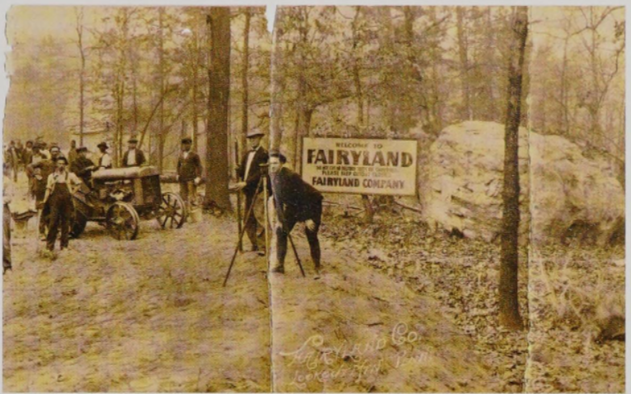
In the 1920s, Garnet & Frieda Carter acquired 700 acres of land across Lookout Mountain to develop an idyllic mountaintop neighborhood. They enlisted Warren H. Manning, one of the nation’s foremost landscape architects (and former protege of Fredrick Law Olmstead) to design and plan Fairyland Estates. Thanks to his thoughtful approach focusing on the area’s natural features, Lookout Mountain retained much of its natural beauty even through its decades of development.
The Carters reserved a parcel that included Rock City as their private residence. Here, Frieda laid out winding pathways through the geological features and outcroppings to create a rock garden unlike any other. She planted native flowers, trees, and shrubs along the trail and was awarded the Bronze Medal of Distinction from the Garden Club of America. Rock City Gardens opened to the public May 21, 1932.



Media Inquiries
For media inquiries, please contact our public relations manager: Pepper Raper, [email protected].