

Though visitors come to Rock City for the stunning views and towering rock formations, it’s easy to forget that we are, in fact, a botanical garden. Our garden team is dedicated to cultivating and conserving the rich biodiversity of over 500 plant species that thrive throughout the gardens and fostering a healthy ecosystem. Gardens Manager Lori Martinez is focusing her horticultural efforts on sunny, as well as shaded, pockets in the gardens, where many pollinator plants thrive.
“Without pollination, all of the food sources that we get from plants would go away, because you have to have cross-pollination to encourage fruiting berries, vegetables and everything that we eat,” Martinez said. “You must have cross-pollination for that to happen.”
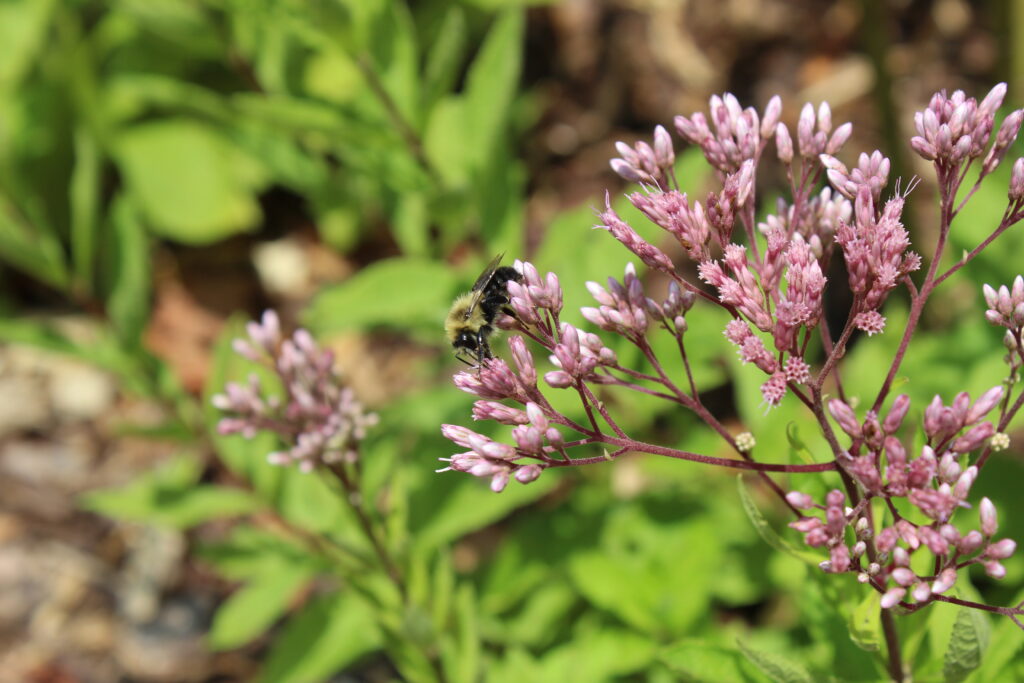
Pollinators are defined as anything that helps move pollen from one part of a flower to another, helping initiate fertilization. Though some plants can pollinate themselves, others rely on wind, water or various insects and animals to carry out the process—including birds, which serve as passive pollinators.
According to the United States Department of Agriculture, some scientists estimate that one of every three bites of food we eat can be attributed to animal pollinators like bees, butterflies, birds, bats, moths, beetles and other insects.
This year, Rock City’s gardens team cultivated three lush gardens designed to support native pollinators: Standing Stones, Elder Flame and Stone Vista (formerly known as Gnome Valley). Over 600 native plants have been added, with most added to Elder Flame, the largest pollinator garden at Rock City. Though in its infancy, this garden will soon blossom into a vibrant habitat for native pollinators.
In fact, the gardens team’s efforts have already been recognized: Rock City has been designated a certified pollinator habitat by Monarchs Across Georgia, a committee of the Environmental Education Alliance dedicated to restoring butterfly habitats across the state.
Research on the decline of the Monarch butterfly is extensive, with some reports estimating that approximately 970 million monarchs have disappeared since 1990 due to such threats as pesticides and habitat loss.
Becoming a certified Monarchs Across Georgia pollinator garden requires a very green thumb—gardens must contain at least two native milkweed, the only plant that Monarch butterflies can lay their eggs on as well as their caterpillars can feed on. Other requirements include having a minimum of four flowering plants species in each growing season, a fresh water source for pollinators, spaces for native bees to repopulate and for pollinators to find shelter, among others.
When it comes to pollinators, Martinez emphasizes the word “native” strongly. It turns out that butterflies, bees and hummingbirds are creatures of comfort; they would much rather buzz around native plant varieties than non-native ones.
Say your local favorite restaurant is replaced by one that isn’t quite to your taste, giving you one less reason to frequent that part of town. When native plants are displaced by non-native plants, pollen—a finite resource—is less likely to be moved, as pollinators seek other areas for plants that they need.
Ridding the gardens of non-native invasive species is another crucial step to developing healthy pollinator habitats—but it’s easier said than done. Many invasive plants closely resemble their native counterparts; for example, both native and non-native honeysuckle grow in the area. English ivy, Chinese wisteria, and kudzu are also a thorn in Martinez’s side as they grow rapidly and are hard to control.
Martinez and her team designed Elder Flame — along with the other gardens — with repetition in mind. It began as a sketch on graph paper, providing a blueprint for planting color throughout the space.
“This is how I design a pollinator garden or any other type of landscape,” Martinez said, emphasizing repetition’s importance in color design. “I want the eye to move throughout the landscape because these things bloom at different times.”
Martinez and her team have planted goldenrod, nodding onion, black-eyed Susan, phlox, aster, hyssop, Joe Pye weed and mountain mint just to name a few.
Pollinator gardens in the Chattanooga area can be planted at any time so long as the ground isn’t frozen. Make sure to ask your local nursery about native plants. Many sell a variety of invasive plants which are never good to put in your garden. Non-invasive, nonnatives are safe to plant, but if you are planting with pollinators in mind, make sure you go with native species. Martinez noted that spring and fall are typically the best time to purchase the plants you need.
“Fall usually has more trees and shrubs but less perennials, so Spring is the big push,” Martinez said. “You still have quite a bit of inventory right now, but your inventory does go down as it gets hotter because it’s hard to keep things watered, so spring and fall are ideal.”
Come visit Rock City’s new pollinator gardens—buzzing with life in every season! By highlighting the vital role pollinators play in our ecosystem, we hope to inspire others to plant and protect pollinator habitats everywhere.