

Looking around your backyard, is there a particular plant that’s growing faster than others? Are your trees tangled in ivy? Are shrubs, trees, or underbrush beginning to die unexpectedly? This could mean that an invasive species has taken root.
According to the National Park Service, an invasive plant species is a non-native species that causes harm to the environment, economy, or human, animal or plant health. These plants often produce large amounts of seeds and have widespread and aggressive underground root systems that choke out other plants. If not identified and maintained, an invasive can kill all plants in its path.
A great example, and one frequently found all over the southern United States, is kudzu. Commonly referred to as “the vine that ate the South.” This fast-growing plant, originally from Asia, has overtaken fields and hillsides across the Southeast and completely swallows anything it touches. However, kudzu is not the only culprit, there are countless other botanical beasts smothering our landscapes, many of which are seemingly benign.
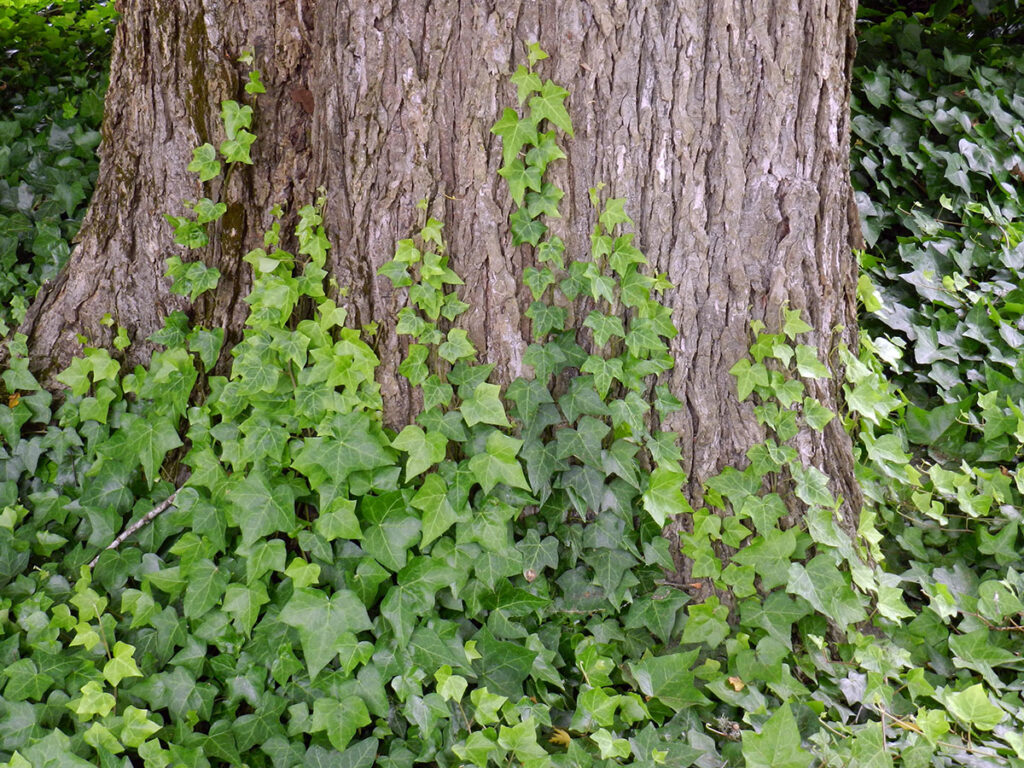
Ivy for instance. There are multiple varieties with one of the most common being English ivy, and as the name suggests, it is not native to the United States. This pervasive and seemingly beautiful vine is found all over our region in gardens, and back yards, up chimneys and over rocks. Thought to be brought over by colonists in the 1700s, it was appreciated then (as it is now) for its shade tolerance, versatility as both a ground cover and climbing vine, and rapid growth. This is also what makes it dangerous. It frequently envelopes trees, weakening branches and preventing sunlight which impedes photosynthesis. Ivy competes with other plants for water and nutrients and can permanently displace native plant populations.
“There’s a saying about English ivy: The first year it sleeps. The second year it creeps, and the third year it leaps,” said Rock City’s Gardens Manager Lori Martinez, who noted that even Rock City isn’t immune from the creeping threat of invasive plants.
In fact, there are 83 invasive or potentially invasive plant species in Georgia, as identified by the Georgia Department of Natural Resources’ Wildlife Resources Division. Examples in the Chattanooga area include non-native honeysuckle, privet, Chinese wisteria, the aforementioned kudzu and English ivy amongst others.
Eradicating these plants takes a lot of digging, spraying and plenty of patience. Removal can occur at any time of year, but Lori says winter is your best bet. For one, it’s not blistering hot making the physical work easier, and cold weather correlates with a lack of foliage and overgrowth so there is less to remove since the plants are dormant. Snakes are in brumation (meaning they are less active) during winter making them less of a threat as well.
For removing English ivy, a mattock is best as it digs into the soil to break up the vine structure. English ivy’s glossy leaves make it reluctant to certain chemicals, so Lori recommends using a brush killer or a spreader sticker, which combines two spray adjuvants to prevent the chemical mix from dripping off the leaves.
“The leaves don’t have any tension to hold that chemical, so the spreader sticker reduces the tension of the leaf and the water by giving it stickiness,” Lori said.
Ligustrum and privet are easy to dig up, especially this time of year when the ground is moist. Lori recommends using a weed wrench, a grabbing mechanism, that grasps the trunk and plucks it from the ground.
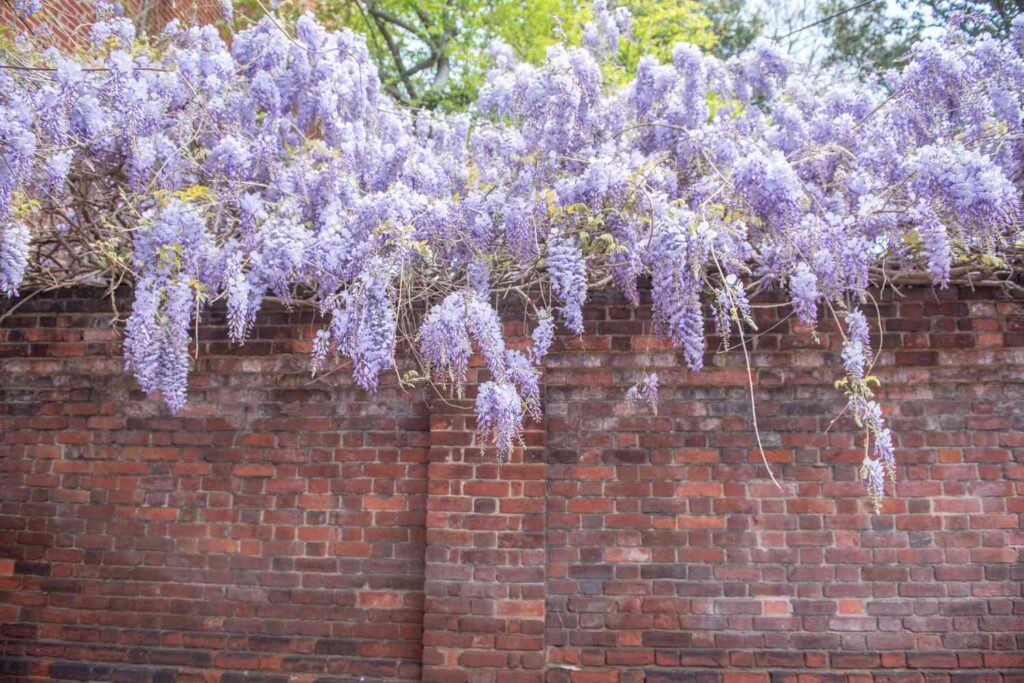
However, the best method is to prevent these plants from taking root altogether. Many of these invasive species are planted on purpose whether for their eye-catching florals or hardiness. Take for instance Chinese wisteria, a seemingly lovely purple flowering plant with a delightful scent. Although beautiful, this deciduous woody vine kills trees and shrubs by girdling them and displaces native wildlife from its natural habitat leading to a severely impaired ecosystem. It can change the structure of a forest by killing trees and altering the light availability to the forest floor.
Not all gardeners know about the dangers invasives present, and many are planted innocently enough. Sometimes it’s a case of mistaken identity: What you thought was Virginia creeper (a native plant) is actually a type of ivy. Although they may seem like a great addition, Lori says stay away.
So how do they keep showing up in gardens across the United States? Even though they are harmful to native environments, these plants are available for sale at many nurseries and garden centers due to demand. The key is to ask, “If you go to a nursery and see that they don’t have any native species, then ask for them” Lori says. “If we stop requesting and stop buying these plants, they will quit selling them.”
This isn’t to say you should steer clear of any non-native plants. The key word is invasive.
Remember, all invasive plants are non-native, BUT not all non-natives are invasive. There are plenty non-native non-invasive plants that are healthy for your garden.
Rock City’s Japanese maples are an excellent example of a non-native plant that thrives and poses no threat to its surrounding landscape. So long as it isn’t classified as invasive, and it’s suitable to your climate or growing region, then happy planting.
Note that most non-natives have a native counterpart. Lori says that a native grass such as Pennsylvania sedge is a great alternative ground cover to English ivy. As for evergreen perennials, she recommends native iris, black-eyed-Susan and native coral bells.
Conservation and continued protection of our forest and floral resources is the direction Lori and Rock City’s garden team are committed to following. We currently grow and care for over 500 native plants. Rock City looks forward to installing perennial pollinator gardens this spring in its most sunny spots at Stone Vista and across from the Pavilion. This colorful array will include goldenrod, nodding onion, black-eyed Susan, phlox, aster, hyssop, Joe Pye weed and mountain mint, among others.
“This will attract birds, bees, butterflies and all those pollinators that we have to have for the survival of our plants,” Lori said. “We wouldn’t have any fruits or vegetables if we didn’t have pollinators.”
If you are looking to care for your garden and neighboring ecosystems at home, start by evaluating what’s already growing. Do you have any invasive species currently? What you find might surprise you. If so, consider removal or develop a management plan to ensure they don’t wreak havoc on the native species. When at a garden center or nursery, request native plants, or at least non-invasives, and lastly don’t forget about the bees, butterflies and other bugs. Pollinators are essential for a healthy ecosystem. Happy gardening!